Edible Copra: What Moisture, Oil Content and FFA Mean
Edible copra is food-grade dried coconut meat for edible coconut oil. Learn what moisture, oil content and FFA tell you before you buy.
by ABRA BRIK Team
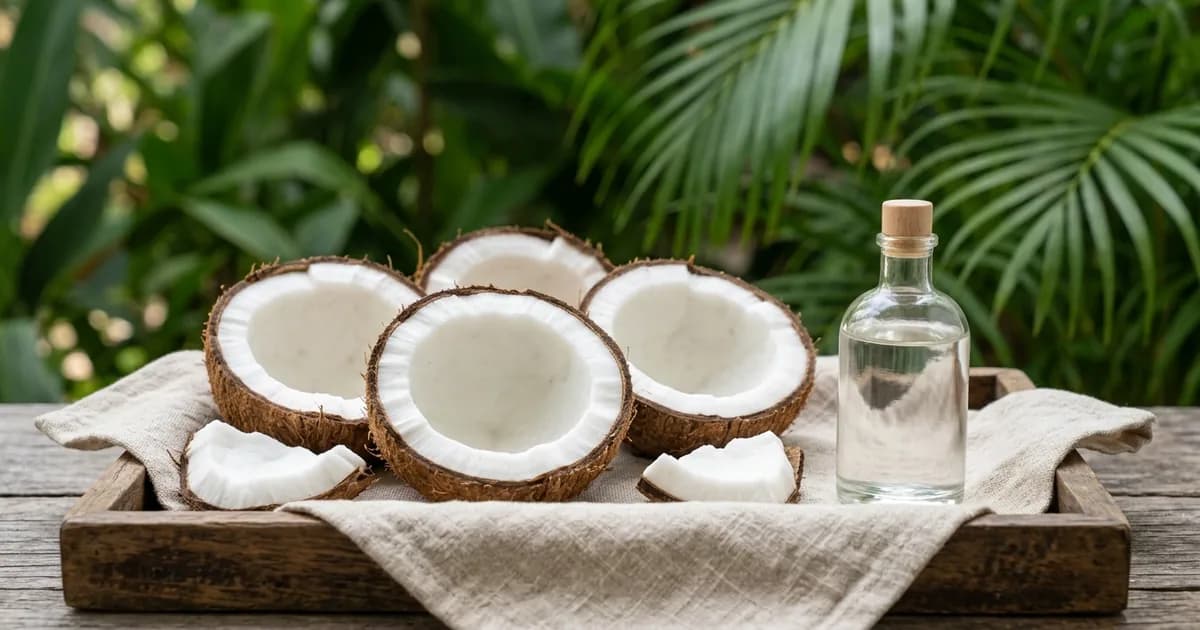
Edible copra is food-grade dried coconut meat used as raw material for edible coconut oil. The three most important figures on an edible copra specification are moisture, oil content and FFA (free fatty acid). Low moisture keeps the copra stable, oil content tells you how much oil can be recovered, and low FFA shows the oil is still fresh rather than rancid.
This article explains each figure in plain terms and shows the reference specification for edible copra from the Kora Coconut catalogue. ABRA BRIK is a brand within Kora Coconut (PT Kora Prima Abadi), and edible copra is supplied through the Kora Coconut catalogue.
What is edible copra?
Copra is the dried kernel, or meat, of the coconut. It is the main raw material for coconut oil. There are several types of copra, and they differ in how they are dried and in their final quality.
Edible copra, often called white copra, is copra of food-grade quality. It has a clean, uniform appearance and a natural coconut aroma, and the share of smoky, burnt or mouldy pieces is tightly limited. That makes it suitable for edible coconut oil mills and food processors.
Industrial-grade copra, such as smoked copra, is usually processed further through refining. For a side-by-side comparison, read our article on smoked copra vs edible copra.
Reference specification for edible copra
The table below lists the reference specification from the Kora Coconut catalogue. Final specifications are confirmed per shipment through pre-shipment inspection and quality documents such as the Certificate of Analysis (COA).
| Parameter | Reference specification |
|---|---|
| Moisture | ≤ 5–6% |
| Oil content | 60–65% min |
| FFA (free fatty acid) | ≤ 0.5% |
| Foreign matter | ≤ 0.5% |
| Smoky | ≤ 5% |
| Burnt | ≤ 2% |
| Mould | Nil / very minimal |
| Grade | Food grade |
| Aroma | Natural coconut aroma |
Specifications may vary with origin, season, production method and buyer requirements, so always ask for a written specification for your shipment.
What does moisture mean in copra?
Moisture is the amount of water left in the copra after drying, expressed as a percentage of its weight. The reference figure for edible copra is ≤ 5–6%.
Water drives many quality problems. Damp copra is more likely to grow mould in storage and transit, and water also helps the reaction that splits fat into free fatty acids. The result is rising FFA and rancid oil. Low moisture means:
- Copra keeps better in storage and over long shipping routes.
- Lower risk of mould.
- More stable FFA from the supplier's warehouse to your mill.
- More of the weight you pay for is coconut meat rather than water.
What does oil content mean?
Oil content is the amount of oil contained in the copra, also given as a percentage of weight. The reference figure for edible copra is 60–65% minimum.
This figure is directly linked to yield: how much oil you can recover from a given amount of copra. Higher oil content means more oil from the same raw material. Keep in mind that actual mill yield also depends on your equipment and process. Oil content shows the potential in the material, not a guaranteed machine output.
What is FFA and why should it be low?
FFA stands for free fatty acid. In coconut, fat is stored in a bound form. When copra is exposed to water, heat or mould, some of that fat breaks down and releases free fatty acids. FFA is therefore a marker of rancidity.
The reference FFA for edible copra is ≤ 0.5%. A low figure matters for edible oil because the oil tastes and smells cleaner, keeps longer, and needs less correction during processing. FFA can rise after copra leaves the warehouse, so low moisture and dry storage matter as much as the FFA reading on the day of testing.
How do the three figures work together?
High moisture opens the door to mould. Mould and moisture push FFA up. High FFA lowers oil quality even when oil content is high. When you assess edible copra, look at all three figures together with the limits for smoky, burnt, mouldy pieces and foreign matter.
Before you sign a contract, use a clear quality checklist. We have put one together in our edible copra quality checklist for buyers.
Frequently asked questions
How is edible copra different from ordinary copra?
Edible copra is food-grade copra. Its limits for moisture, FFA, smoky, burnt and mouldy pieces are tighter than those of industrial-grade copra, so it suits edible coconut oil production.
What moisture level is good for edible copra?
The Kora Coconut catalogue reference for edible copra is moisture ≤ 5–6%. The final figure is confirmed per shipment through pre-shipment inspection and the COA.
Why should copra FFA be low?
FFA is a marker of rancidity. A low FFA, with a reference of ≤ 0.5% for edible copra, means fresher oil with a cleaner taste and longer keeping quality.
Does ABRA produce copra at its Bogor factory?
No. ABRA BRIK is a brand within Kora Coconut, and edible copra is supplied through the Kora Coconut catalogue with specifications confirmed per shipment.
How is edible copra priced?
We do not publish a price list. Pricing is discussed according to volume and contract duration. Ask for a written quotation on WhatsApp or through our contact page.
Request a specification or sample
See the product details on the edible copra page. For a written specification, a sample or a volume-based quotation, contact our team on WhatsApp or through the contact page. Tell us your application, expected volume and destination country so we can reply faster.
Interested in our products?
Chat with us on WhatsApp for pricing, samples, and availability.
Chat via WhatsApp