What Is Coconut Bioleather? A Plant-Based Sheet Material
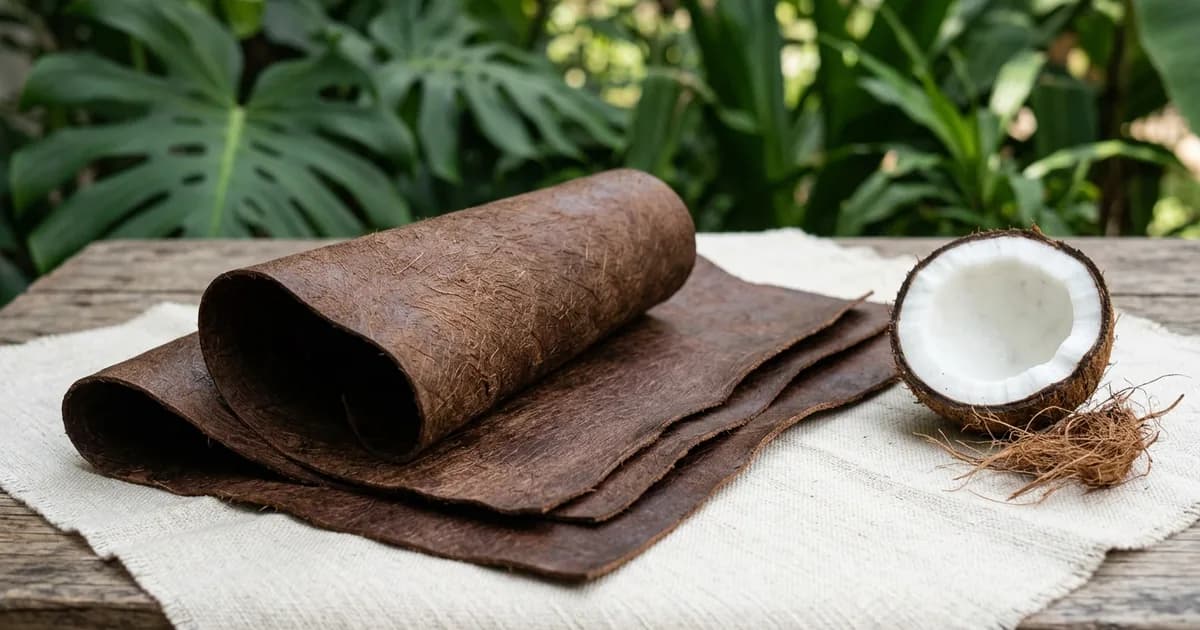
Coconut bioleather is a light, flexible, coconut-based sheet with a natural organic grain, used for accessories, covers, bags and fashion goods.
by ABRA BRIK Team
Coconut bioleather is a plant-based, coconut-derived sheet material that is light, flexible, foldable and has a natural organic grain. It can be cut and stitched for accessories, book covers, bags and fashion goods. Thickness ranges from 0.5 to 2.0 mm with a matte to semi-matte surface.
This article explains what coconut bioleather is, how it differs from conventional leather in general terms, and what it is used for. All data comes from the Kora Coconut catalogue. ABRA BRIK is a brand within Kora Coconut (PT Kora Prima Abadi), and coconut bioleather is supplied through the Kora Coconut catalogue.
What does "bioleather" mean?
"Bioleather" is used for sheet materials that look and work somewhat like leather but come from biological raw materials rather than animal hide. Many kinds exist, with different raw materials and methods.
Coconut bioleather is one of them. The Kora Coconut catalogue describes it as coconut-based bioleather, a plant-based sheet material. The catalogue does not detail how it is made, so we do not describe the process here. If you need process information for documentation or labelling, ask when you request a sample.
Reference specification
| Parameter | Reference specification |
|---|---|
| Material type | Coconut-based bioleather |
| Appearance | Natural textured sheet |
| Surface finish | Matte to semi-matte |
| Thickness | 0.5–2.0 mm |
| Flexibility | Flexible and foldable |
| Texture | Natural organic grain |
| Form | Sheet material |
Specifications, dimensions and finishes may vary with project requirements, raw material availability and manufacturing method. Samples are recommended for evaluation before commercial orders.
How does it differ from conventional leather?
Conventional leather is made from animal hide, such as cowhide or goatskin, processed by tanning. Coconut bioleather differs in origin: it is plant-based, not animal-based. Other differences drawn from the catalogue:
- Texture: a natural organic grain, different from the pores and creases of animal hide.
- Supply form: sheets, with thickness, size and finish set per project.
- Surface: matte to semi-matte.
Properties such as tensile strength, abrasion resistance and water resistance are not listed in the catalogue. Do not assume coconut bioleather behaves exactly like animal leather or synthetic material. Test these properties on a sample for your intended use.
What are its strengths according to the catalogue?
- Plant-based material with coconut as the base.
- Light and flexible, foldable and easy to shape.
- Natural organic texture visible in every sheet.
- Suitable for cutting and stitching in craft and sewing workflows.
What is coconut bioleather used for?
According to the catalogue, it suits:
- Accessories, such as small wallets, card holders, key fobs or glasses cases.
- Covers for books, journals, notebooks or folders.
- Bags, including bag bodies, pouches or specific bag panels.
- Fashion goods, such as garment details or product accents.
These are categories of use. Whether it suits a specific product still needs testing on a sample, especially for parts that carry weight or face frequent rubbing. To choose the right thickness and finish, read our guide on choosing coconut bioleather for fashion products.
What is not listed in the catalogue?
So your expectations are accurate, here is what the Kora Coconut catalogue does not state: the manufacturing process, tensile and tear strength, resistance to water, abrasion and sunlight, standard colours and sheet sizes, and care instructions for finished goods. Ask about these or test them yourself on a sample. When the sample arrives, measure thickness at several points with a caliper, check the finish and texture, fold the sheet repeatedly, try cutting and stitching with your own tools, and record the results as the basis for a written specification.
Who is it for?
Fashion brands, accessory makers, publishers and stationery studios, and brand owners who want to add a plant-based material option. Because thickness, size and finish follow the project, it fits buyers who are ready to test samples first.
Frequently asked questions
Is coconut bioleather the same as cowhide?
No. Cowhide comes from an animal. Coconut bioleather is a plant-based sheet material with a natural organic grain.
How thick is coconut bioleather?
The Kora Coconut catalogue reference is 0.5–2.0 mm. Thickness, size and finish follow project requirements.
Can it be stitched?
Yes. The catalogue states it can be cut and stitched. Test seams on a sample before production.
Does ABRA produce bioleather at its Bogor factory?
No. ABRA BRIK is a brand within Kora Coconut, and coconut bioleather is supplied through the Kora Coconut catalogue.
How is it priced?
We do not publish a price list. Pricing is discussed according to volume, project specification and contract duration.
Request a sample
See the product details on the coconut bioleather page. For samples, specifications or a quotation, contact us on WhatsApp or through the contact page. Tell us what you plan to make so we can prepare a suitable sample.
Interested in our products?
Chat with us on WhatsApp for pricing, samples, and availability.
Chat via WhatsApp