Smoked Copra for Coconut Oil Mills: A Buyer's Guide
Smoked copra is a cost-effective feedstock for coconut oil milling and refining. Here is what a mill should put in its purchase specification.
by ABRA BRIK Team
Smoked copra suits coconut oil mills that press and refine oil, because it is a cost-effective raw material with good oil recovery that is available in large volumes. Its reference specification includes 60–65% minimum oil content, moisture ≤ 7% and FFA ≤ 3.0%. The crude oil is then refined at the mill before sale.
This article is written for industrial buyers: procurement managers, production heads and oil mill owners. All figures come from the Kora Coconut catalogue. ABRA BRIK is a brand within Kora Coconut (PT Kora Prima Abadi), and smoked copra is supplied through the Kora Coconut catalogue.
What is smoked copra?
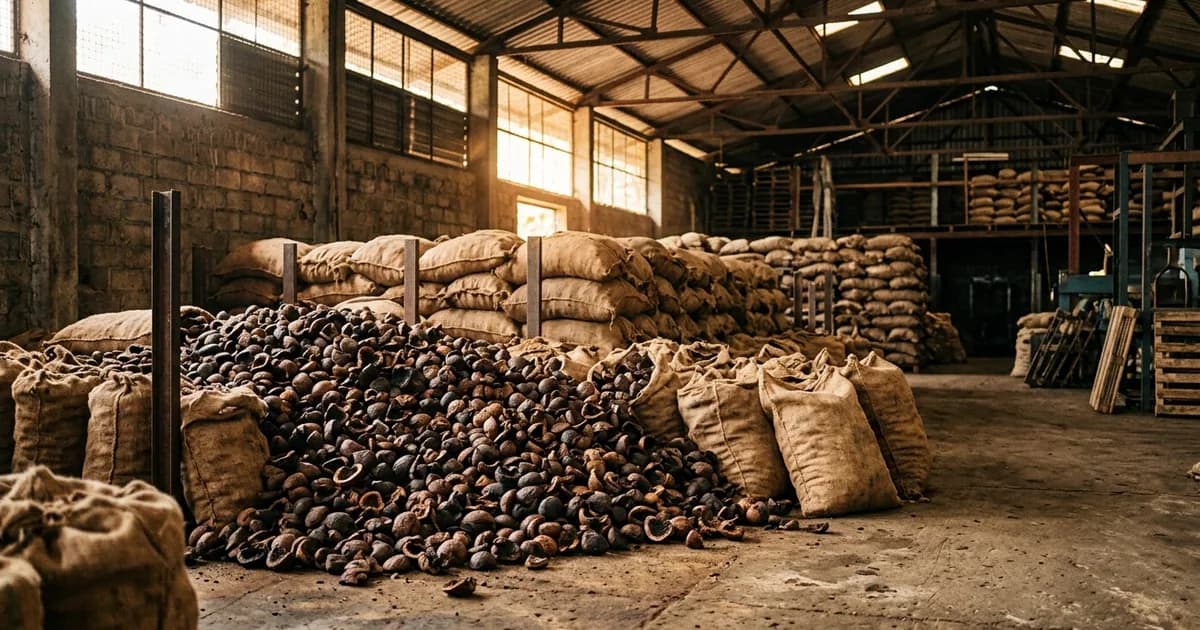
Smoked copra is dried coconut meat that has been smoke-dried. Smoke and heat from the fire dry the meat until its moisture drops. The result is brown to dark brown, industrial-grade copra. It differs from food-grade edible copra; see the full comparison in smoked copra vs edible copra.
Why do oil mills choose smoked copra?
According to the Kora Coconut catalogue, smoked copra offers:
- A cost-effective raw material for mills that process large volumes.
- Good oil recovery, with a reference oil content of 60–65% minimum.
- Availability in large volumes with consistent industrial supply.
- A good fit for milling and refining.
At the mill, copra is ground and pressed to release crude oil. Crude oil from smoked copra generally carries a darker colour, a smoky smell and higher FFA than oil from edible copra, so it is refined. Refining improves colour, odour and free fatty acid level before the oil is ready for sale.
Reference specification for smoked copra
Final specifications are confirmed per shipment through pre-shipment inspection and the Certificate of Analysis (COA).
| Parameter | Reference specification |
|---|---|
| Moisture | ≤ 7% |
| Oil content | 60–65% min |
| FFA (free fatty acid) | ≤ 3.0% |
| Foreign matter | ≤ 1.0% |
| Mould content | ≤ 5% |
| Colour | Brown to dark brown |
| Drying method | Smoke drying |
| Grade | Industrial grade |
Specifications may vary with origin, season, production method and buyer requirements.
What should a mill put in its purchase specification?
Oil content
This is the basis for valuing the raw material. State the minimum and the test method you use. Actual yield also depends on your equipment and process.
Moisture
Moisture determines how well copra keeps in storage and transit. Too much raises the risk of mould and rising FFA. The catalogue reference is ≤ 7%.
FFA
FFA determines how heavy the refining load will be. The higher the FFA, the more correction the mill needs. The catalogue reference is ≤ 3.0%.
Foreign matter and mould
Foreign matter adds weight without oil and can damage machinery; mould lowers oil quality. The catalogue references are foreign matter ≤ 1.0% and mould ≤ 5%.
Volume and schedule
Supply volumes are discussed per contract. Prepare your expected monthly requirement, delivery schedule and contract duration so supply can be planned consistently.
Inspection and documents
Agree on who inspects before shipment. The catalogue lists documents that can be prepared depending on product and destination, including the COA, Certificate of Origin, Phytosanitary Certificate, Fumigation Certificate, Packing List, Commercial Invoice, Bill of Lading and Third-Party Inspection.
How do you keep copra quality up to the mill?
- Store copra in a dry place with good airflow.
- Keep it away from rain and damp floors.
- Process it soon after arrival, especially if moisture is near the limit.
- Retest moisture and FFA on arrival and compare with the COA.
How is smoked copra priced?
We do not publish a price list. Pricing is discussed according to volume and contract duration. Send us your requirement and we will prepare a written quotation.
Frequently asked questions
Is smoked copra suitable for edible coconut oil?
Smoked copra is intended for milling and refining, and its crude oil needs refining before use. If you need feedstock for edible oil with less processing, look at edible copra.
What is the minimum order for smoked copra?
Volume is discussed per contract, based on your mill's needs and delivery schedule. Contact us with your expected requirement.
What is the oil content of smoked copra?
The Kora Coconut catalogue reference is 60–65% minimum. The final figure is confirmed per shipment through pre-shipment inspection and the COA.
Can I get a smoked copra sample?
Yes. Samples are available on request. Tell us your application, expected volume and destination.
Request a specification and quotation
See the product details on the smoked copra page. For a written specification, a sample or a quotation based on volume and contract duration, contact us on WhatsApp or through the contact page.
Interested in our products?
Chat with us on WhatsApp for pricing, samples, and availability.
Chat via WhatsApp