How to Use Pillow Briquettes for Grilling: A Practical Guide
Practical steps to light, arrange and set heat zones with pillow briquettes, plus storage tips and basic safety rules.
by ABRA BRIK Team
Using pillow briquettes for grilling is simple: light them in a chimney starter or over a natural fire starter, wait until the surface is covered in a thin layer of grey ash, then spread the coals into two heat zones. You cook over the hot zone and move food to the cooler zone when needed. Store unused briquettes somewhere dry, and always burn them outdoors or in a well-ventilated space.
This guide is for restaurant kitchens, caterers, hotels and home grillers using ABRA BRIK pillow briquettes, made from 100% coconut shell and measuring 50 × 50 × 38 mm.
What do you need before you start?
- A grill with good airflow, with bottom and top vents that open.
- A chimney starter or solid natural fire starters, which light briquettes evenly without a fuel smell.
- Heat-resistant gloves and long tongs to move hot coals.
- A bucket of water or a small extinguisher close to the grill.
- Dry briquettes. Damp briquettes take longer to light and smoke more.
How do you light pillow briquettes?
Coconut shell briquettes are dense, so they usually take longer to light than ordinary lump charcoal. That is normal.
- Fill the chimney starter with pillow briquettes. The shape stacks with open air gaps between pieces.
- Place a natural fire starter or rolled paper under the chimney and light it.
- Let the fire climb from the bottom. Avoid stirring the briquettes at this stage.
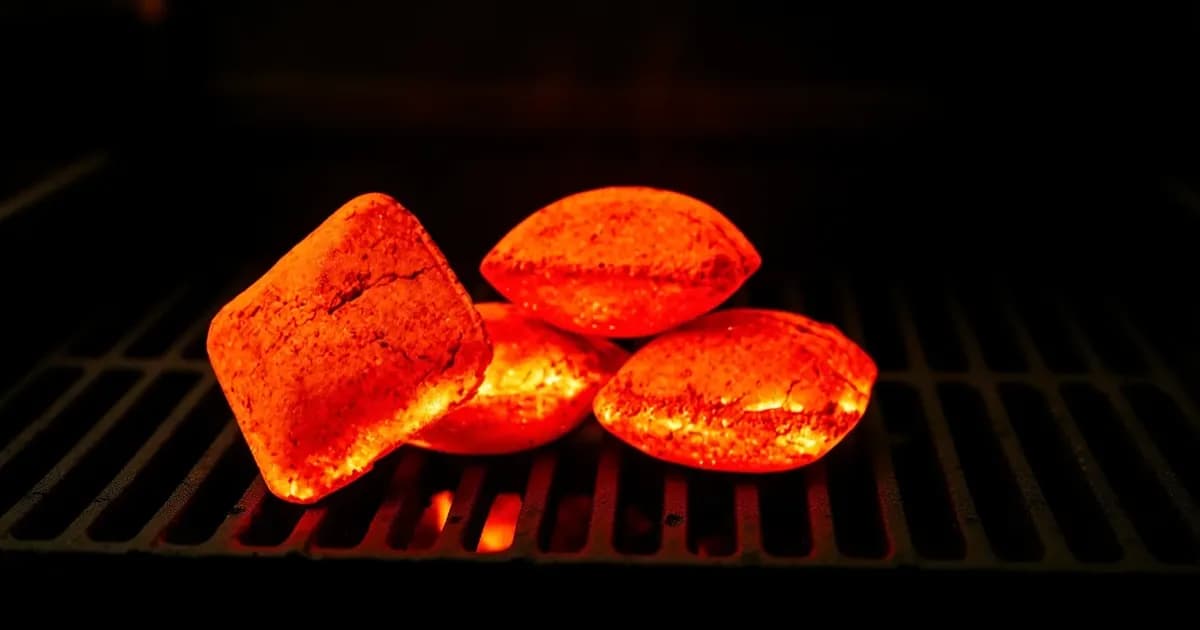
- Wait until most of the surface turns grey with a thin coat of ash. The coals are now ready.
- Pour the coals onto the charcoal grate carefully, wearing gloves.
Never use petrol, kerosene or any liquid fuel not made for charcoal. If you use a purpose-made lighter fluid, follow the instructions on its label, and never pour any liquid onto coals that are already lit.
How do you arrange the coals into heat zones?
Clean, controlled grilling relies on two zones. The direct zone sits right above the coals. The indirect zone is the side of the grill with no coals underneath.
- Direct zone (high heat): pile the coals more tightly on one side to sear meat, skewers or vegetables.
- Indirect zone (medium heat): leave the other side empty or lightly covered, and move thick cuts there so they cook through without burning outside.
The uniform pillow shape helps you build an even bed of coals. In a commercial kitchen, the same layout every day keeps results consistent from shift to shift.
How do you control heat while grilling?
- Use the vents. More open means more air and more heat; more closed means less heat.
- Add briquettes early. For long sessions, place fresh briquettes at the edge of the pile before the old coals fade, so they catch from their neighbours.
- Change the distance. If your grate can be raised, lift it to lower the heat without touching the coals.
- Close the lid when a recipe needs even heat from above and below.
We deliberately give no burn-time figure. Burn time depends on the number of briquettes, the grill, airflow and weather. The best guide is your own log of the first few days of use.
How should you store briquettes?
- Keep them in a dry, covered area away from rain and splashes.
- Stack sacks or cartons on pallets, not directly on the floor.
- Close opened packs tightly.
- Keep them away from stoves, open flames and flammable materials.
- Use older stock first.
Which safety rules matter most?
- Never burn charcoal in an enclosed room. Burning coals release carbon monoxide, an odourless and dangerous gas. Use briquettes only outdoors or in kitchens with proper ventilation and exhaust.
- Never leave a lit grill unattended.
- Keep children and pets away from the grill.
- Let ash cool completely before disposal. Douse it with water and keep it in a metal container.
Why coconut shell briquettes?
Reference figures from the Kora Coconut catalogue for ABRA BRIK pillow briquettes: ash 2.19–2.55%, fixed carbon 78.59–80.17%, moisture 6.4–6.78% and calorific value 7,447–7,448 kcal/kg. ABRA BRIK briquettes have been tested at the laboratory of Indonesia's Ministry of Forestry, and final figures for each order are confirmed through pre-shipment inspection and a COA. New to this product? Read what a pillow briquette is, with its size, specifications and grades.
Frequently asked questions
When are pillow briquettes ready to cook on?
Timing depends on the lighting method, weather and airflow. The safest signal is visual: they are ready when most of the surface is grey and covered in a thin layer of ash.
Can I use pillow briquettes inside a restaurant?
Only where the kitchen has adequate ventilation and exhaust. Never burn briquettes in a closed room without ventilation.
Can unburned briquettes be reused?
Yes. Close the grill vents to put them out, then relight them next time together with fresh briquettes.
Can I order in bulk under my own brand?
Yes. Pillow briquettes come in Premium and Grade A and are available for private label. Pricing is discussed according to volume and contract duration.
Ready to try them?
See the full specification on the Pillow Briquette page. For a sample or a quotation, message us on WhatsApp or use our contact page.
Interested in our products?
Chat with us on WhatsApp for pricing, samples, and availability.
Chat via WhatsApp